Disclosure: As an Amazon Associate I earn from qualifying purchases. Some links go to other retailers and may also earn us a commission. Full disclosure.
Not sure it fits your year? Check your Model Y: 2020–2024, Juniper (15.4″ or 16″ screen) or Model Y L →
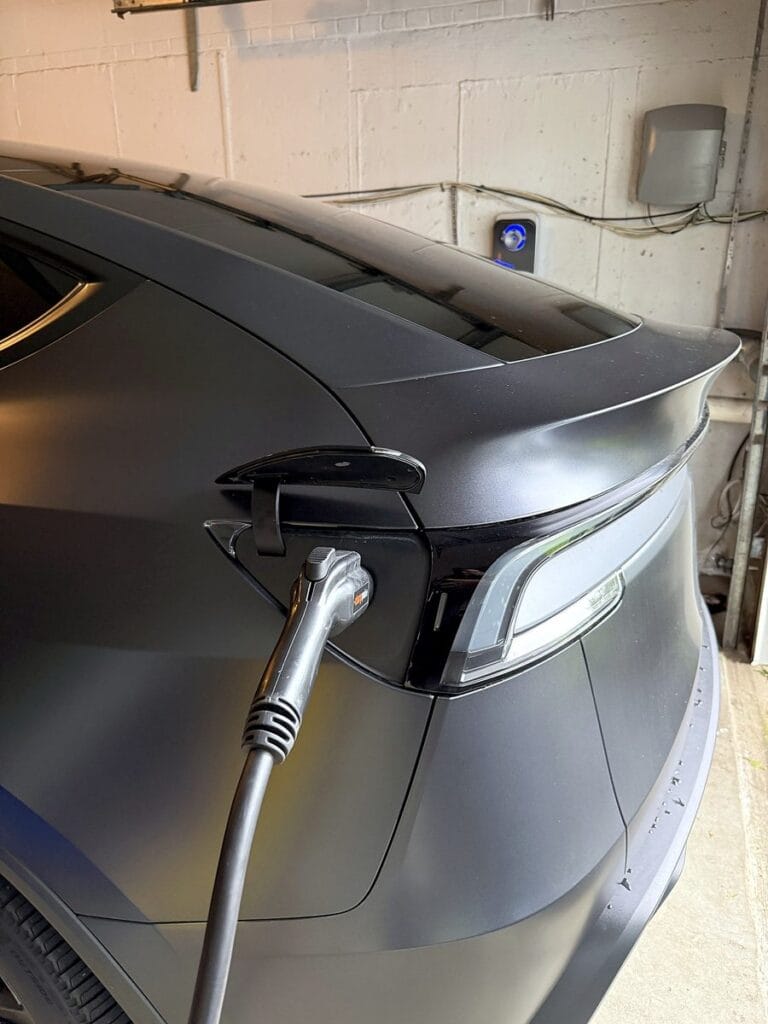
Tested in our 2026 Model Y Premium (Juniper). Works with our car: we charge at 40 amps on a NEMA 14-50 outlet using the J1772 adapter that came with the car.

Quick verdict: ChargePoint Home Flex
Owner-testedA plug-in (NEMA 14-50) charger we run at 40 amps with the J1772 adapter that came with our car. We kept it from our plug-in hybrid rather than choosing it over Tesla’s Wall Connector.$599.009% off today on Amazon · price as of 2026-10-31
⚠️ Electrical safety: read this first
This article shares our own experience. It is not installation instructions. Have a licensed electrician install any EV charger outlet or hardwired unit, and follow the charger manufacturer’s instructions and your local electrical code.
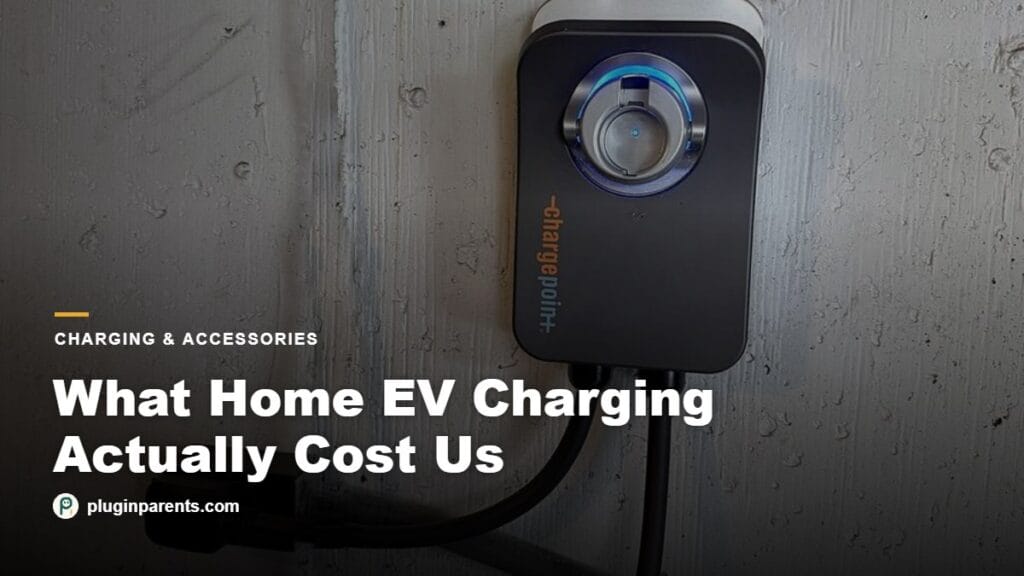
We use a ChargePoint Home Flex plugged into a NEMA 14-50 outlet. Here’s what the install cost, how it works day to day, and what we’d tell a neighbor who asked the same question.
What we bought and why
The ChargePoint Home Flex (NEMA 14-50 plug) plugs into a standard 240V outlet instead of being hardwired. On this plug-in version it’s adjustable from 16 to 40 amps, and we run ours at 40 amps.
| Spec | ChargePoint Home Flex (NEMA 14-50) |
|---|---|
| Output | Up to 40A / 9.6kW, adjustable 16–40A in the app |
| Range added | About 30 miles of range per hour at 40A |
| Cable length | 23 ft |
| Connector | J1772 (works with all non-Tesla EVs; Tesla owners use the adapter that ships with the car) |
| App | ChargePoint app: schedule charging, see usage, Alexa compatible |
| Warranty | 3-year limited |
These figures come from ChargePoint’s own listing. The hardwired version of the Home Flex goes up to 50 amps. Ours is on the 14-50 plug, so it tops out at 40, which is plenty for charging overnight.
ChargePoint vs. the Tesla Wall Connector
The obvious alternative is Tesla’s own Wall Connector. The honest answer is that we didn’t choose the ChargePoint over it. We already had a ChargePoint from our previous plug-in hybrid, so when the Model Y arrived we just kept using it, and it’s been working fine.
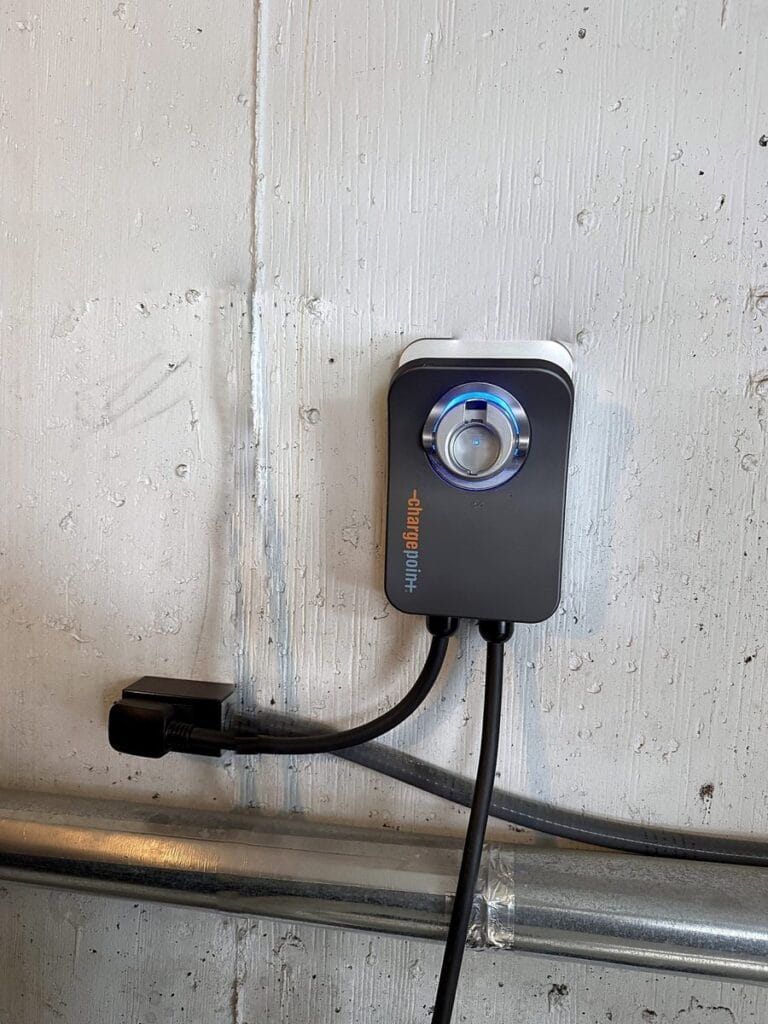
Tesla’s Wall Connector has a NACS plug, so it only charges Teslas (and other NACS cars) without an adapter. The ChargePoint uses the J1772 connector, the standard most other EVs and plug-in hybrids in the US use. We plug in with the J1772 adapter that came with our car.
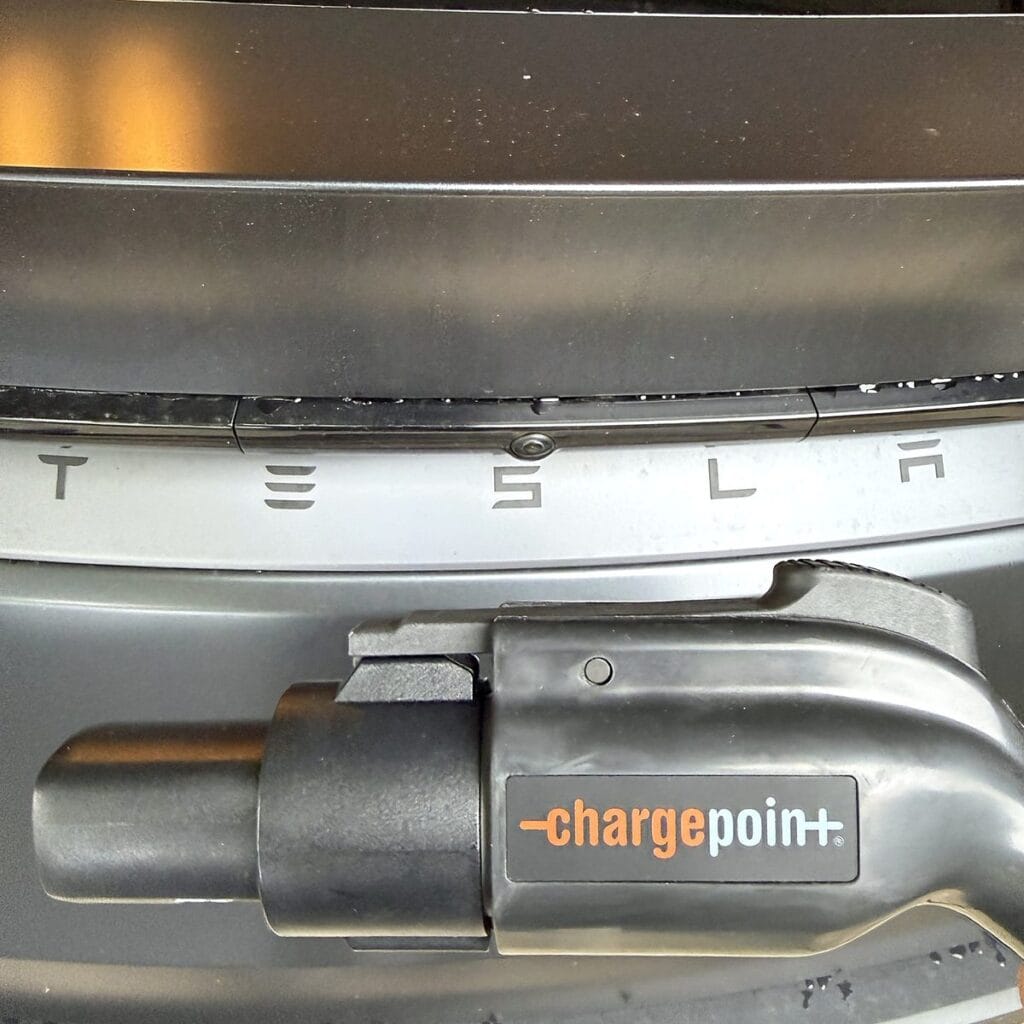
That’s the main difference. A J1772 charger works with most non-Tesla EVs and plug-in hybrids too, so it’s flexible if anyone else charges at your house. Tesla’s Wall Connector is a natural choice if every car in your driveway will be a Tesla. If you want one charger that works with anything, a J1772 charger like ours is the more flexible option.
What the install actually cost
We hired a licensed electrician instead of doing it ourselves. All in, we paid about $500 for the outlet, the wiring and the labor, when we had it installed for our previous plug-in hybrid. The charger itself was separate.
What kept the cost on the low end: the outlet is right next to our breaker box, so the electrician didn’t have to run a long line. If your panel is near capacity, or the charger has to go far from the panel, expect the estimate to climb. Get a quote before you buy anything, since that’s the number that varies from house to house.
Plug-in vs. hardwired
| Plug-in (NEMA 14-50, what we have) | Hardwired | |
|---|---|---|
| Max output on Home Flex | 40A | 50A |
| If you move | Unplug it and take it with you | Stays with the house, or needs to be uninstalled |
| Outlet needed | Yes, a 240V NEMA 14-50 receptacle | No, wired directly |
| Good for | Renters, or anyone who might relocate | Homeowners who want the max charging speed and a permanent setup |
We charge overnight, so 40 amps has been plenty for us. About 30 miles of range per hour fills the car well before morning.
Living with it
We plug in when we get home and let it charge on a schedule set in the ChargePoint app. The app also shows how much power we’ve used.
In practice it’s simple: the charger is set to 40 amps, we schedule the charge overnight, and I’ve set the car to stop at 80%, so it’s at 80% every morning without us thinking about it. The ChargePoint app connects to our power company, so it can estimate what each charge costs.
One more thing to check before you buy: we submitted our electric bill to our power company and got a rebate for the charger. Rebates vary by utility, and we can’t say whether Tesla’s own charger would qualify with yours, so look at your utility’s EV page first.
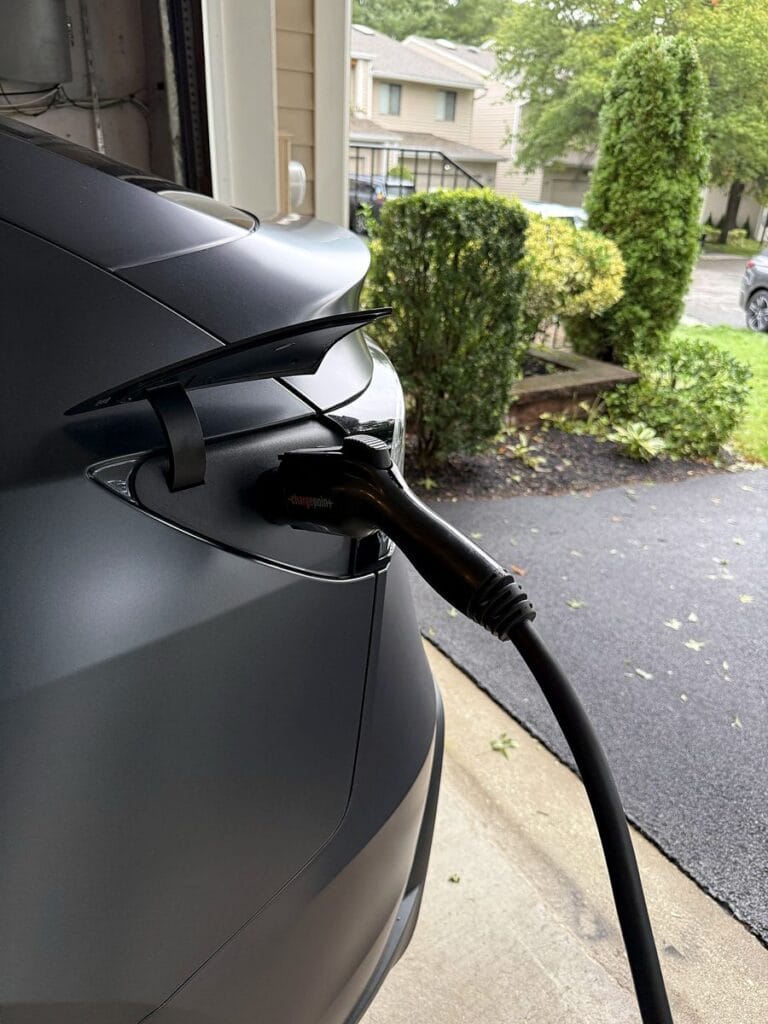
Is it worth it over public charging?
For a family that drives the Model Y every day, yes. We plug in at home and start each day at 80%, without a stop at a Supercharger. The roughly $500 install is a one-time cost, and it saves you the money and time you’d otherwise spend on public charging.
ChargePoint Home Flex (NEMA 14-50)
Owner-tested
The charger we use; plugs into a 240V outlet, up to 40A
$599.009% off today on Amazon · price as of 2026-10-31
Pairs well with
- Spigen J1772 Adapter Holder Owner-tested: keeps the adapter in the door pocket, ready at public chargers
- Spigen Door Pocket Trash Can Owner-tested: the first thing we added; lives in the same door pocket
Affiliate links: we may earn a commission at no cost to you.
Wondering how fast a home charger pays for itself? Our free Tesla charging cost calculator uses your state’s electricity rate and your miles to show your monthly cost, what you’d spend on gas, and how fast a home charger pays for itself.
Home EV charging cost FAQ
How much does it cost to install a home EV charger?
Our install of a NEMA 14-50 outlet for a plug-in charger cost about $500. Get a quote from a local electrician, since panel capacity and the distance from the panel to your garage both change the price.
Do I need an electrician?
We hired one. A 240V circuit isn’t a DIY job unless you’re a licensed electrician.
Plug-in or hardwired?
Ours is plug-in (NEMA 14-50). The upside is you can unplug it and take it with you if you move. Hardwired supports up to 50 amps on the Home Flex.
Does this work with a Tesla?
Yes. The Home Flex uses a J1772 connector, and our Model Y came with a J1772 adapter. We use it to charge every day.
Is ChargePoint better than the Tesla Wall Connector?
Not better, just different. The Tesla Wall Connector plugs straight into a Tesla. A J1772 charger like the Home Flex works with most EVs, and with a Tesla through the adapter. That matters if you have more than one kind of EV or might switch brands someday.
Keep the J1772 adapter where you can find it: our Spigen J1772 adapter holder review.